A pinch of salt that shook an empire
Under British law, it was illegal for Indians to collect or sell their own salt. Every household had to buy taxed salt — a tax that fell hardest on the poorest, on something no kitchen can do without. Gandhi chose salt precisely because it was ordinary: everyone understood what it meant.
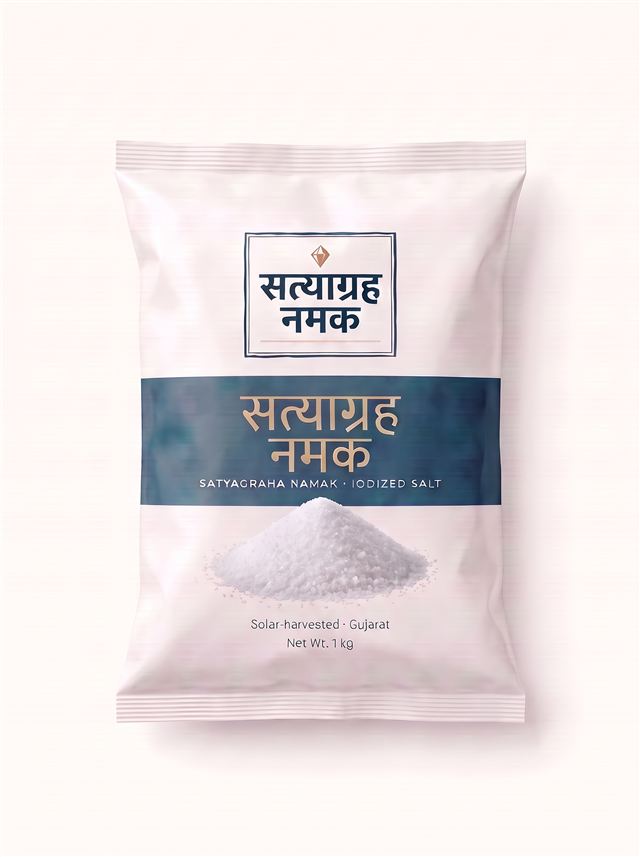
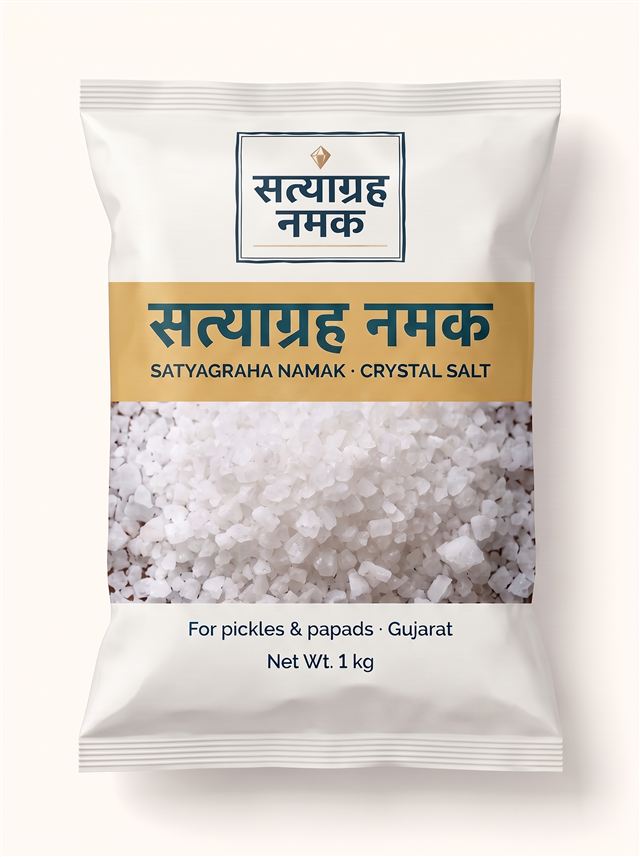
Satyagraha — holding firmly to truth — was his method: no violence, no retreat, only the quiet refusal to accept an unjust law. The march that carried that idea to the sea gave our salt its name.
"With this, I am shaking the foundations of the British Empire." M. K. GANDHI · DANDI · 6 APRIL 1930
SABARMATI ASHRAM → DANDI · ~385 KM · 24 DAYS · GUJARAT COASTLINE
-
12 MARCH 1930
The march begins
Gandhi leaves Sabarmati Ashram on foot with 78 chosen satyagrahis, bound for the sea. He has told the Viceroy plainly, in writing, what he intends to do.
-
MARCH–APRIL 1930
Village to village through Gujarat
For 24 days the marchers walk about 385 kilometres, stopping in villages along the way. Crowds swell to thousands; the world's press follows every step.
-
5 APRIL 1930
Reaching Dandi
The march arrives at Dandi, a small coastal village on the Gujarat shoreline — the same coastline our salt comes from today.
-
6 APRIL 1930
The salt law is broken
At dawn, after prayers, Gandhi bends down and lifts a handful of natural salt from the mud flats. With that simple act, an unjust law stands defied — without a single blow struck.
-
THE MONTHS AFTER
Salt becomes a symbol
Civil disobedience spreads across India; tens of thousands court arrest making and selling salt. The humble crystal becomes the emblem of swaraj — self-rule, self-reliance, dignity in the everyday.